

Rare Plant Rediscovered in Masungi During Snail Study
The discovery happened unexpectedly while researchers were conducting a snail reconnaissance study within Masungi Georeserve’s “600 Steps” area in Baras and Tanay, Rizal.
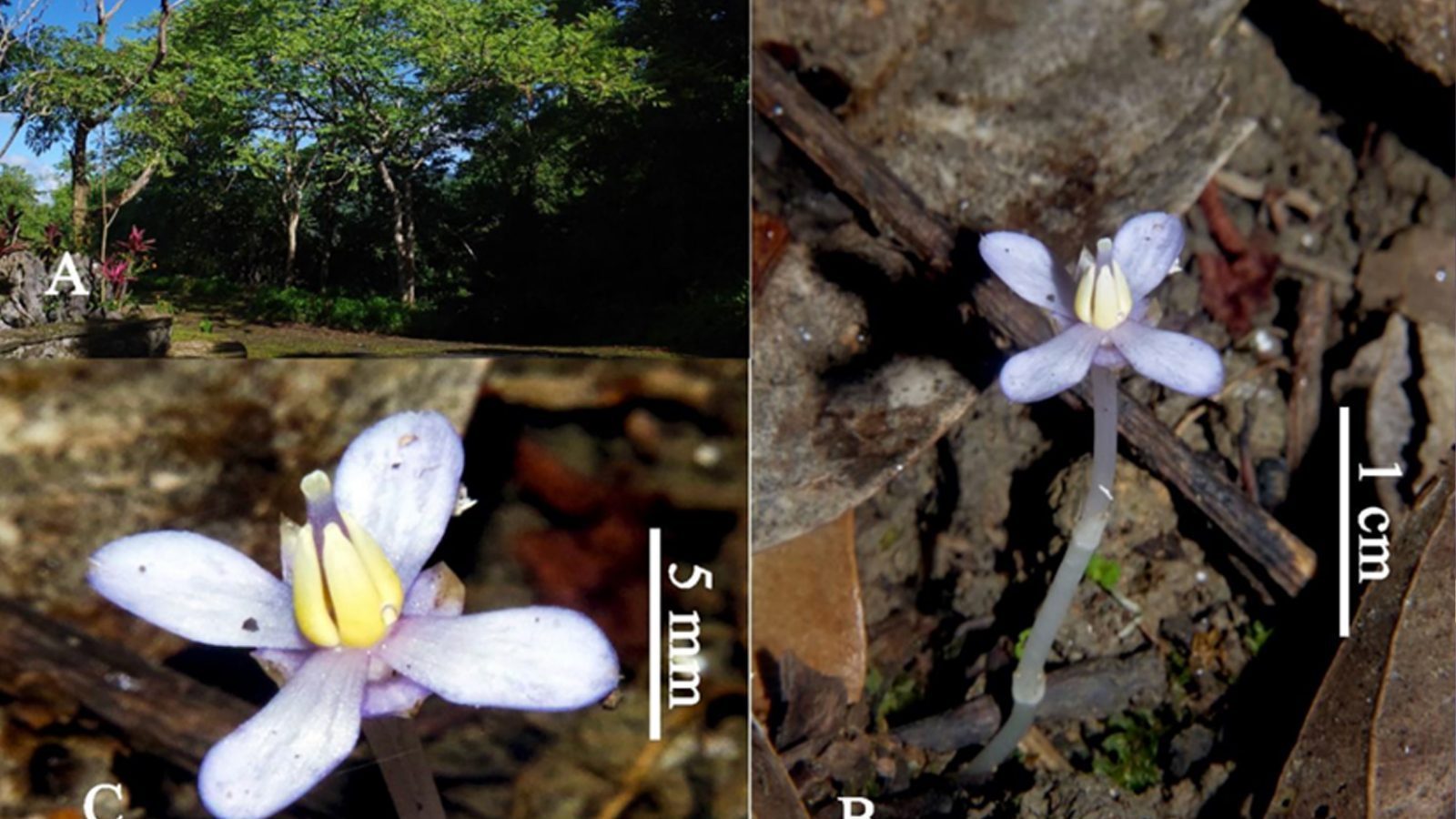
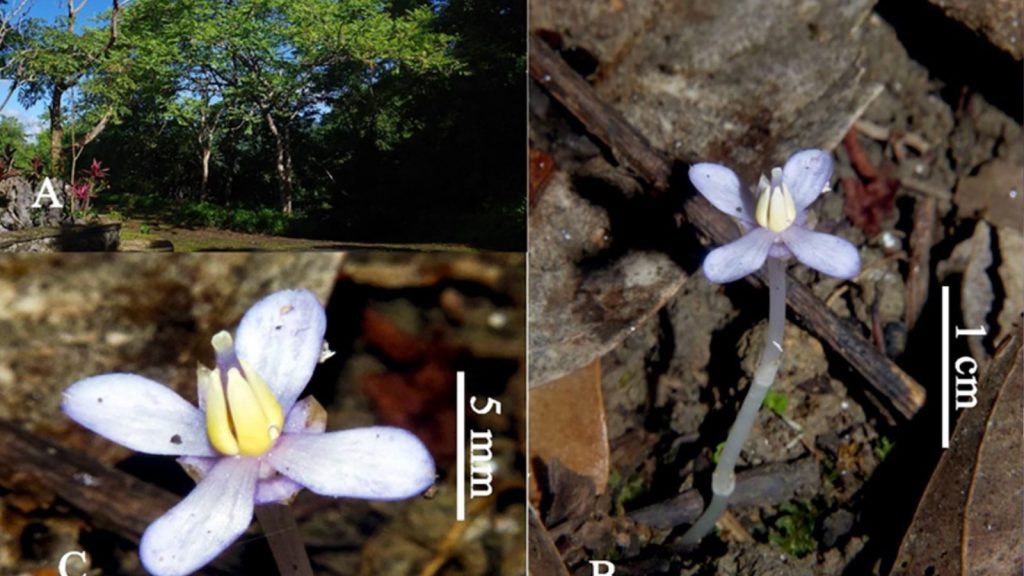
What began as a field study on snails led to the rediscovery of a plant species long absent from verified wild records. According to reports from GMA News, scientists confirmed that the plant found in Masungi matched Exacum loheri, a species last collected in the late 19th century.
The research note, titled “Notes on the Poorly Known Exacum loheri (H. Hara) Klack. (Gentianaceae) and a Key to the Philippine Species of Exacum,” was published by the Philippine Journal of Science.
Rare Plant Rediscovery Shows Why Exacum loheri Is Unusual
Unlike ordinary green plants, Exacum loheri lacks chlorophyll. This means it does not rely on photosynthesis in the same way most plants do.
Instead, the species survives through a rare relationship with fungi. This type of plant is known as mycoheterotrophic, meaning it obtains nourishment through fungal connections in the soil. This allows it to live in shaded, humus-rich environments such as Masungi’s limestone forests.
This unusual survival strategy makes the rediscovery even more significant. Plants like Exacum loheri are often difficult to find because they may appear only under specific environmental conditions and can easily be overlooked during ordinary field surveys.
Rare Plant Rediscovered in Masungi Is a Major Biodiversity Find
Researchers said Masungi Georeserve currently hosts the only known living wild population of Exacum loheri. This makes the area especially important for Philippine biodiversity and conservation efforts.
The rediscovery adds to the growing list of rare and endemic species found in Masungi’s protected limestone landscape. It also shows how much remains unknown about the country’s forests, even in areas that are relatively close to Metro Manila.
Masungi Rare Plant Discovery Highlights Limestone Forest Protection
Masungi Georeserve is known for its limestone formations, forest trails, and conservation work. But beyond its popular landscape, the area also serves as a habitat for species that may not exist anywhere else in the wild.
The presence of Exacum loheri strengthens calls to protect Masungi’s forests from threats such as land disturbance, quarrying, illegal activities, and habitat degradation. Since the plant depends on a delicate relationship with fungi and forest soil, damage to its habitat could also threaten its survival.
A report from Interaksyon also noted that the rediscovery happened during a study focused on snails, showing how different branches of biodiversity research can lead to unexpected scientific findings.
Conservation Beyond the Rare Plant Rediscovery
The rediscovery of Exacum loheri is more than just a scientific milestone. It is also a reminder that many species in the Philippines may still be waiting to be documented, studied, and protected.
For scientists, the find opens the door to further research on the plant’s ecology, distribution, and conservation status. For conservationists, it reinforces the need to preserve limestone forests that support rare and sensitive species.
The rare plant rediscovered in Masungi is now a symbol of how valuable Philippine ecosystems can be, especially when protected areas are given the attention and care they need.
For more updates on biodiversity and conservation, check our Philippine news coverage.
Join the conversation
DisqusComments are powered by Disqus and are not stored in the SpillPH WordPress database.